PEB Frames
Multi Span
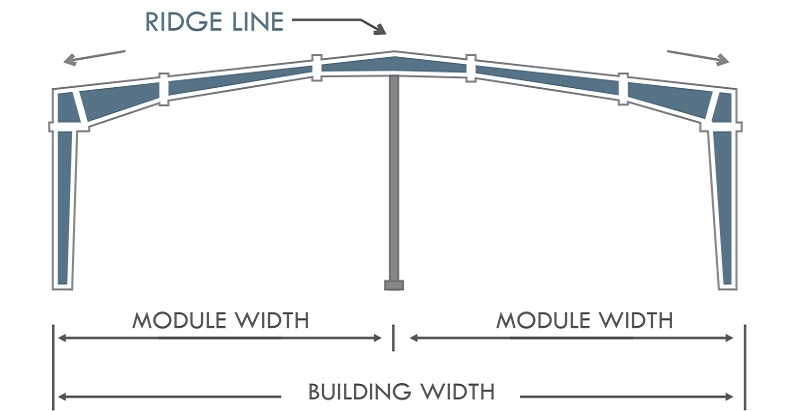
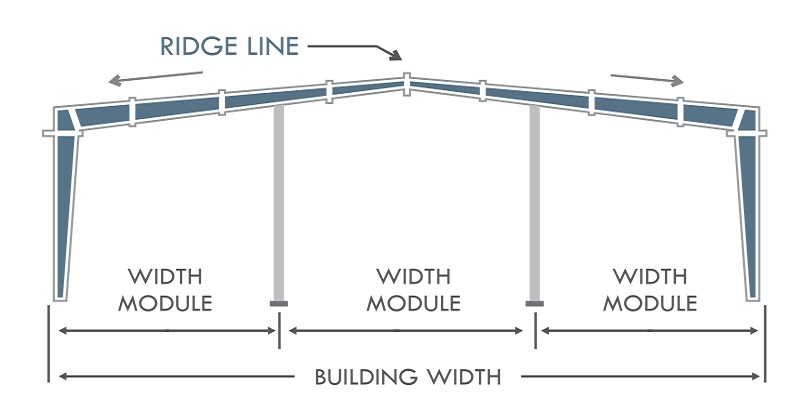
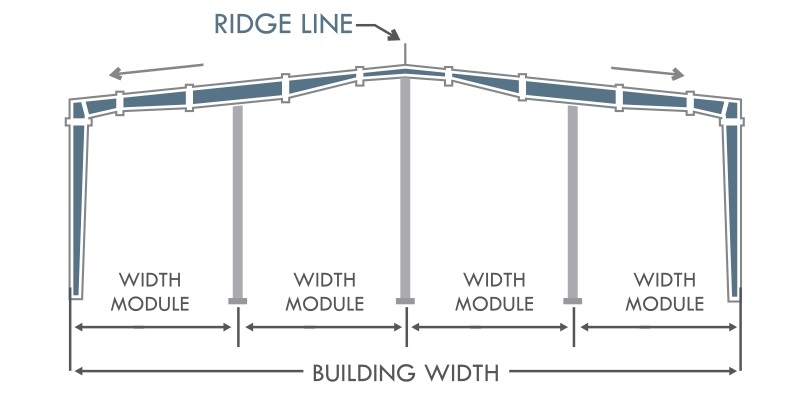
A Multi-Span frame has multiple spans that are spaced evenly across the building’s width. Examples include single-gable buildings and multi-gable buildings with interior columns . The maximum practical width of the structure is 200 meters for buildings with more than two spans and 150 meters for buildings with two spans. The Multi-Span column design’s adaptability makes it suitable for use in large manufacturing plants, distribution centers, and any type of warehouse. Large buildings with low-sloped roof designs work well with Multi-Span frames. Adding interior columns to a building’s structure can lower its weight and cost. These columns may take up less clear space, but their placement can be planned to enhance the buildings’ intended use.
Lean - To
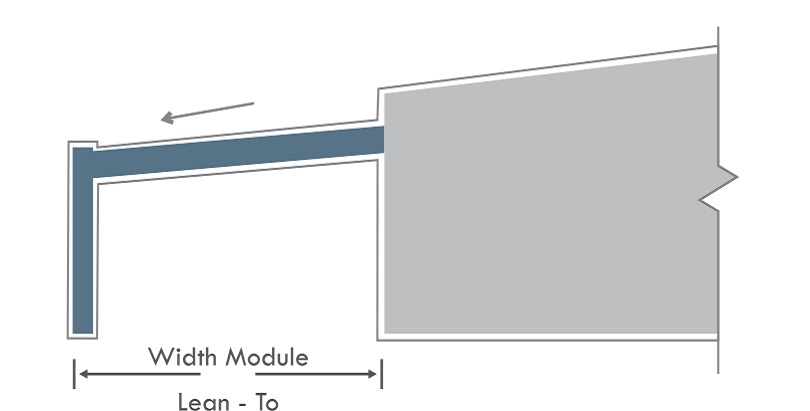
Originally, a Lean-To building was described as one where every rafter leaned against a wall or other existing structure. The most affordable way to expand or retrofit existing structures is with lean-to buildings. They are an excellent option for adding offices or extra storage space for both personal and commercial use to already-existing buildings.
Multi Gable (MG) I / II
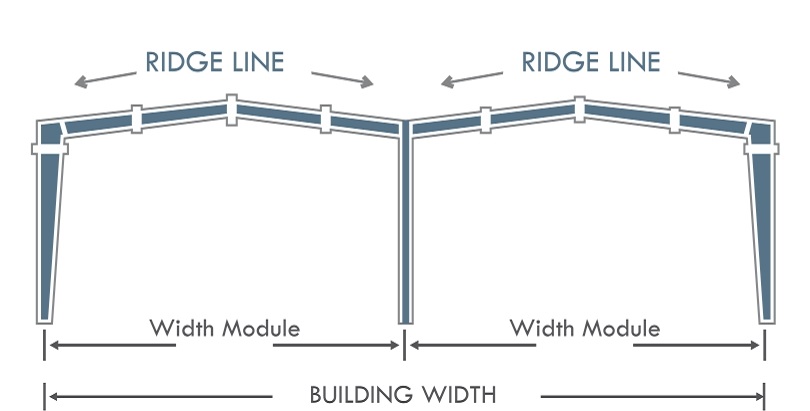
Two or more gable buildings sharing common sidewall columns are referred to as Multi-Gable (MG) buildings. However, because the ridge height is significantly lower in multi-gable buildings than in other frame types—especially in very wide buildings—investors can save money on materials. Clear Span or Multi-Span frames can be found inside Multi-Gable buildings.
Clear Span with EOT Crane
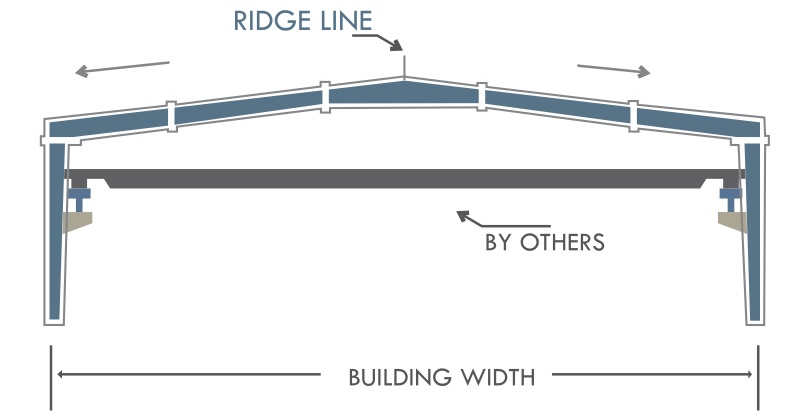
EOT cranes are widely used for heavy load relocation or unloading in manufacturing facilities, warehouses, and railway workshops. In general, the EOT crane has the mechanical ability to move in both directions and is capable of effortlessly raising and lowering large loads. Only areas with clear span can be used and where EOT cranes can be installed.
Mono Slope Or Single Slop (SS)
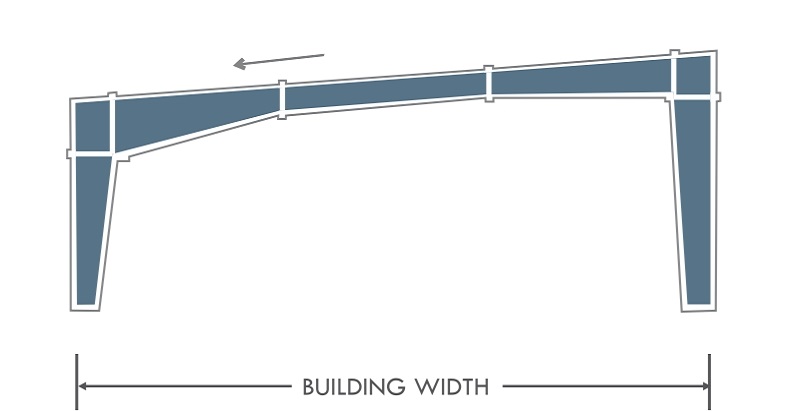
Single Slop (SS) is another name for Mono Slop. A single-slope (SS) building is a structural steel structure with a single-plane sloping roof. From one wall to the other, there is a slope. Single Slope structures are affordable for spans up to 12 meters in width. Gable roofs are typically specified for buildings with spans greater than 12 meters in order to maximize budget and take aesthetics into account. Buildings on a single slope can have multiple spans or clear span. A wide range of building types, including retail malls, offices, warehouses, shipyards, and many more, use single slope building designs. Some clients like single slope steel frame buildings due to their lower stance in addition to their cost savings.
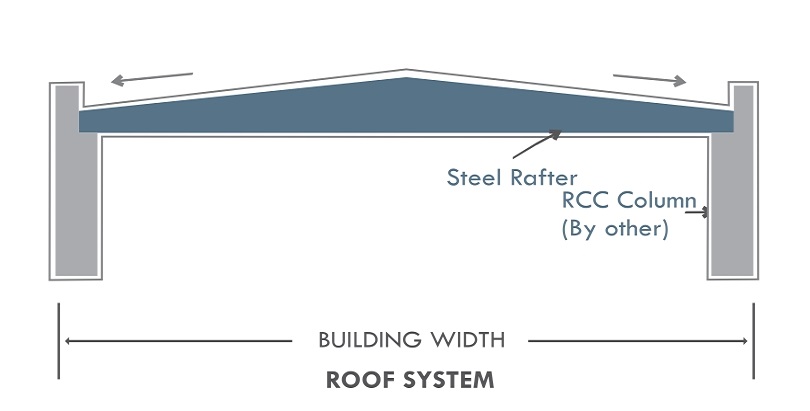
Rafter System
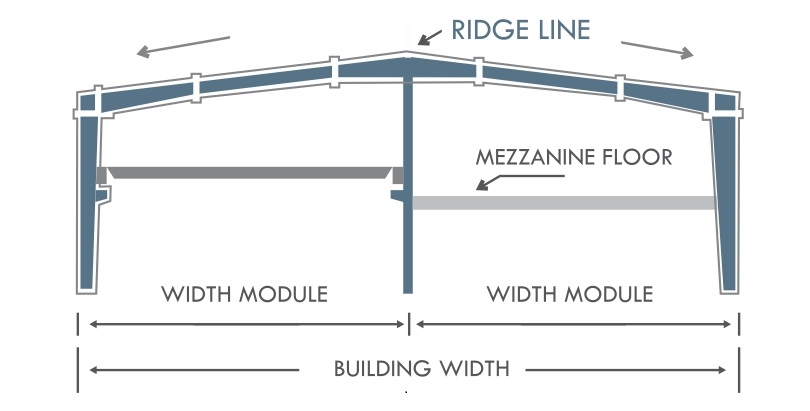
Multi Span with Crane & Mezzanine
A mezzanine floor is an intermediate floor between main floors of a building, and therefore typically not counted among the overall floors of a building. Often, a mezzanine is low-ceilinged and projects in the form of a balcony. In industrial applications, mezzanine floor systems are semi-permanent floor systems typically installed within buildings, built between two permanent original stories. Commercially sold mezzanine structures are generally constructed of three main materials; steel, aluminium, and fibreglass.
The mezzanine is often used in shops and similar spaces for storage of tools or materials. The high roof of the shop is ideal for a mezzanine, and offices can be put either below or above it. Mezzanines are frequently used in industrial operations such as warehousing, distribution or manufacturing. These facilities have high ceilings, allowing unused space to be utilized within the vertical cube. Industrial mezzanine structures are typically either structural, roll formed, rack-supported, or shelf supported, allowing high density storage within the mezzanine structure.
This combines an EOT crane with a mazzanine floor. and this kind of arrangement is feasible for multi-span structures, where the EOT crane should be supported by one span, and the remaining spans can have mazzanine floors depending on the needs.
Built-up Curved Rafter
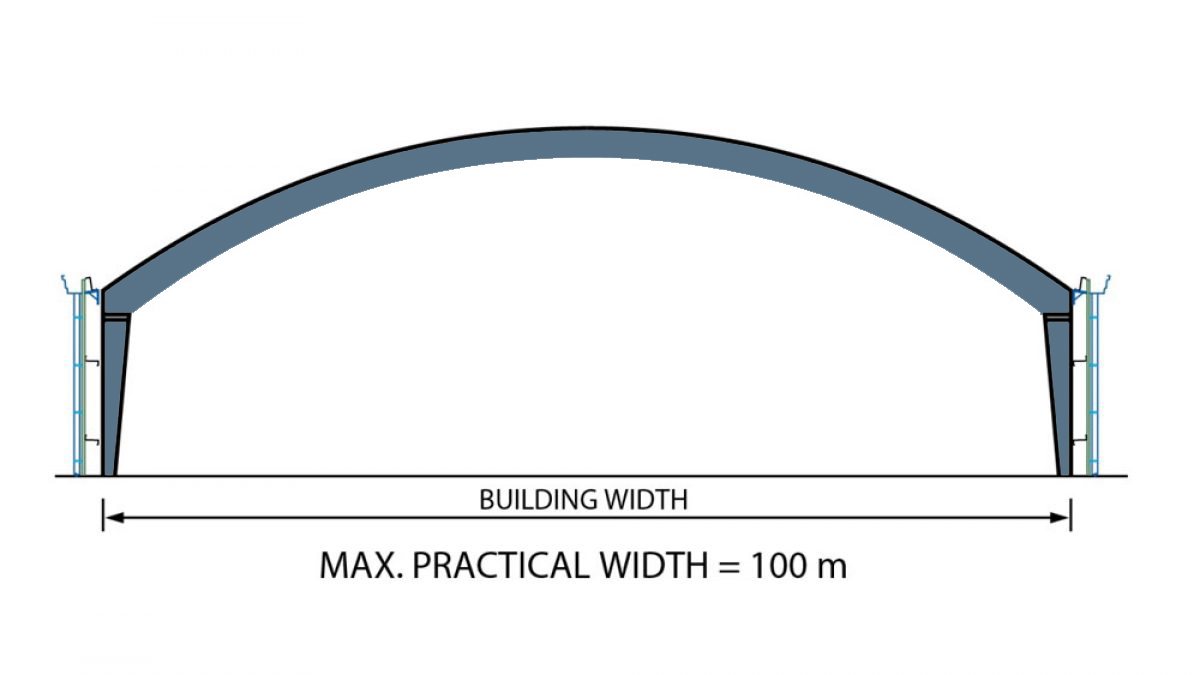
Consolidated The Built-Up Curved Rafter building is a pre-engineered structure that features a curved steel structure to give it a unique appearance. Its modular width can also be expanded. This architectural style is frequently used to construct structures that let in plenty of natural light, giving public spaces like malls and airports a feeling of grandeur and spaciousness. This resulted in the creation of structural designs with large expanses of glazing supported by arched frames or relatively mildly curved steel trusses.
The exposed arching steelwork can improve the interior space perception even with cladding structures. Curved roofs can work well for distribution and industrial buildings as well. In order to appeal to local planners, curved roof designs help to avoid the air of austerity that is frequently associated with “industrial warehouse” designs. Furthermore, the cost of Built-up Curved Rafter buildings is quite similar to that of other steel constructions. When compared to the total cost of the structure, the additional expense of curved steelwork is typically negligible and is frequently compensated for by savings on flashing and ridge detail. When installing roof cladding on curved roof beams, it is frequently not necessary to pre-curve the panels because they can follow the roof’s curvature naturally during installation.
Web Curved Rafter
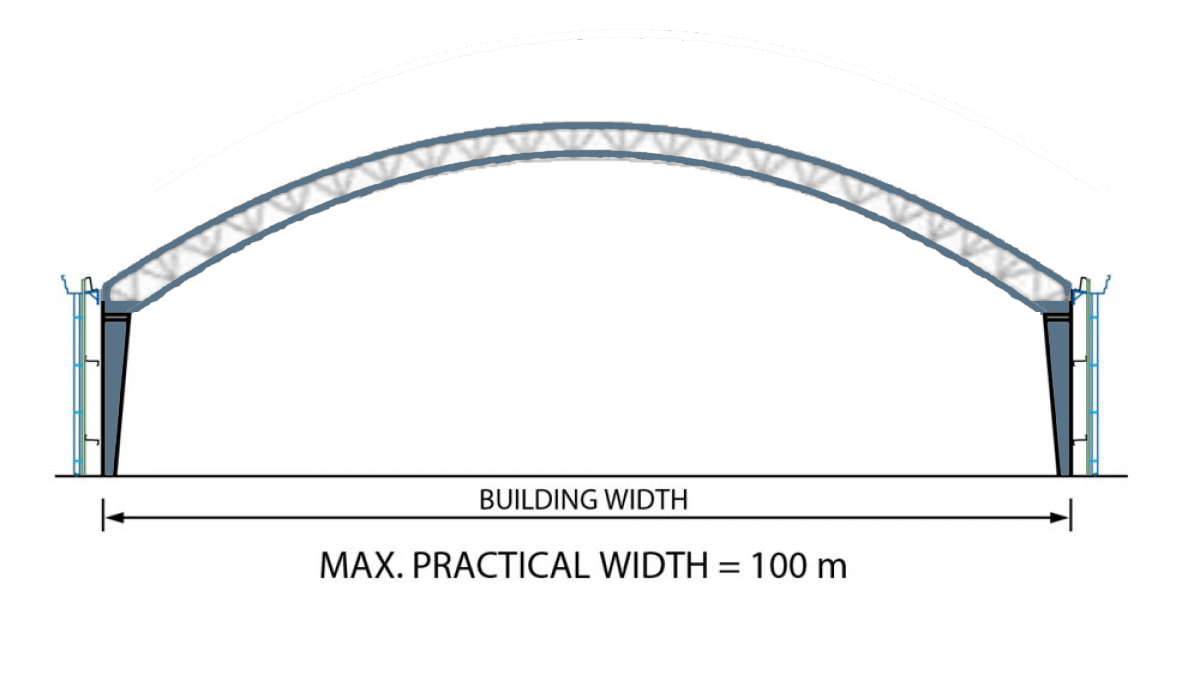
Web Curved Rafter is one of the standard frames for Pre-engineered Steel Buildings. The Web Curved Rafter are a truss structure from 2 Omegas cold-formed sections (upper and lower) connected with the square tubes’ hollow sections by bolts. In pre-engineered buildings, a web curved rafter refers to a structural element designed to support the curved portion of a roof. This type of rafter is characterized by its arched or curved shape, contributing to the aesthetics of the building while maintaining structural integrity. The curvature is pre-engineered and fabricated to precise specifications, enabling efficient installation and enhancing the architectural appeal of the structure, often used in applications where a unique or attractive roofline is desired.